
How to Build a Social Listening System
Stop relying on ad-hoc searching. Learn how to build a repeatable social listening system with the right keywords, filters, and alerts to consistently find new customers.
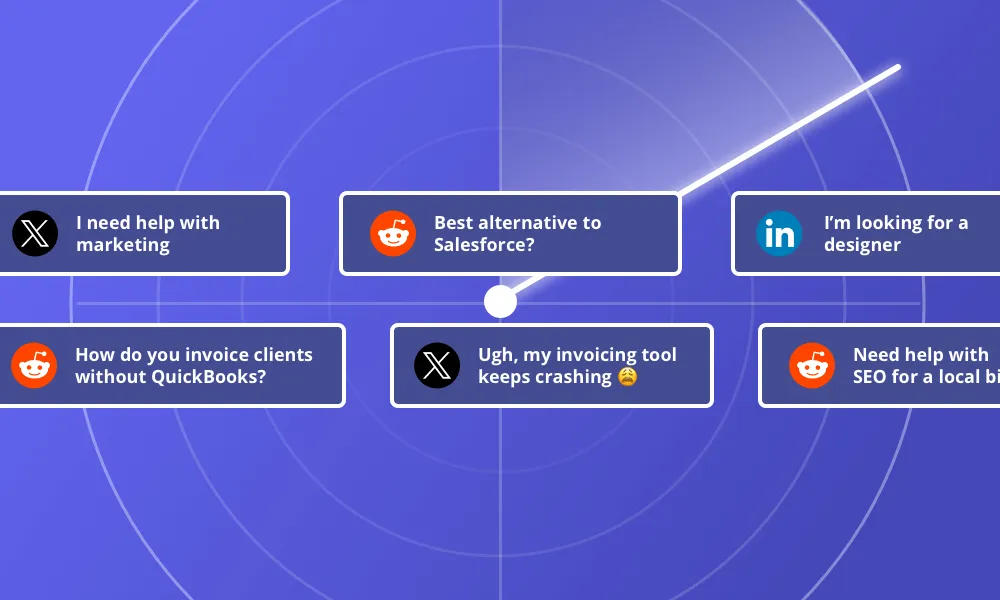
In this section, we'll cover:
A repeatable system is what separates random wins from a predictable customer acquisition channel. By the end, you’ll know how to set up your own scalable social listening process.
- 01 Why you need a system The problem with ad-hoc searching
- 02 Step 1: Choosing keywords How to pick buyer-intent terms
- 03 Step 2: Picking platforms Where to listen first
- 04 Step 3: Filtering noise Settings to sharpen your signal
- 05 Step 4: Monitoring methods Manual vs. automated workflows
- 06 Step 5: Organizing & acting How to track and reply to leads
- 07 Step 6: Review & adjust Refining your system over time
- 08 Quick-start checklist Daily routine for success
1. Why You Need a System (Not Just Ad-Hoc Searching)
Manually checking Reddit, LinkedIn, or X works for a day or two — but life gets busy. Without a system, you'll inevitably miss high-intent posts that could have turned into leads.
- Consistency A system ensures you see every relevant conversation, even when you’re offline.
- 🕒 Time leverage Saves hours of random scrolling across platforms.
- 📈 Scalability Turns social listening from a "nice idea" into a repeatable customer acquisition channel
2. Step 1 — Choosing the Right Keywords
Keywords are the backbone of your listening system. Go beyond broad terms and focus on buyer-intent phrases.
🎯 High-Intent Keywords
- Problem statements: "struggling with invoicing"
- Comparisons: "HubSpot vs Pipedrive"
- Alternatives: "alternative to Salesforce"
- Recommendations: "Can anyone recommend a CRM?"
⚠️ Avoid These
- Overly broad words: "marketing", "sales"
- Vague terms with no intent: "software", "tools"
- Single words only: "CRM", "app"
Bonus: Include common misspellings and shorthand for your industry. For example, "Quickbooks" vs "QB."
3. Step 2 — Picking Your Platforms
Start small with 1–3 platforms where your audience is most active. Expand once you’ve nailed the basics.
Reddit monitoring is best for niche communities and long-form Q&A. Posts often rank in Google.
X (Twitter)
Twitter monitoring is great for catching real-time needs as they surface.
LinkedIn monitoring works well for professional, B2B-focused conversations with a longer shelf life.
4. Step 3 — Filtering Out Noise
Not every post mentioning your keyword is relevant. Filters sharpen your system’s signal.
🔍 Filters to Use
- Language (English, etc.)
- Minimum character count
- Exclude posts with only links/images
- Remove duplicates or spam
🛑 What to Avoid
Don’t track overly broad terms that bring endless noise. Focus on intent-rich patterns.
5. Step 4 — Deciding on Your Monitoring Method
There are two main approaches: manual or automated.
🛠️ Manual (Free but Time-Heavy)
🤖 Automated (Fast & Scalable)
Add all your keywords to Alertly once. Choose platforms and match types. Then get a single daily email with every fresh post — no manual checking.
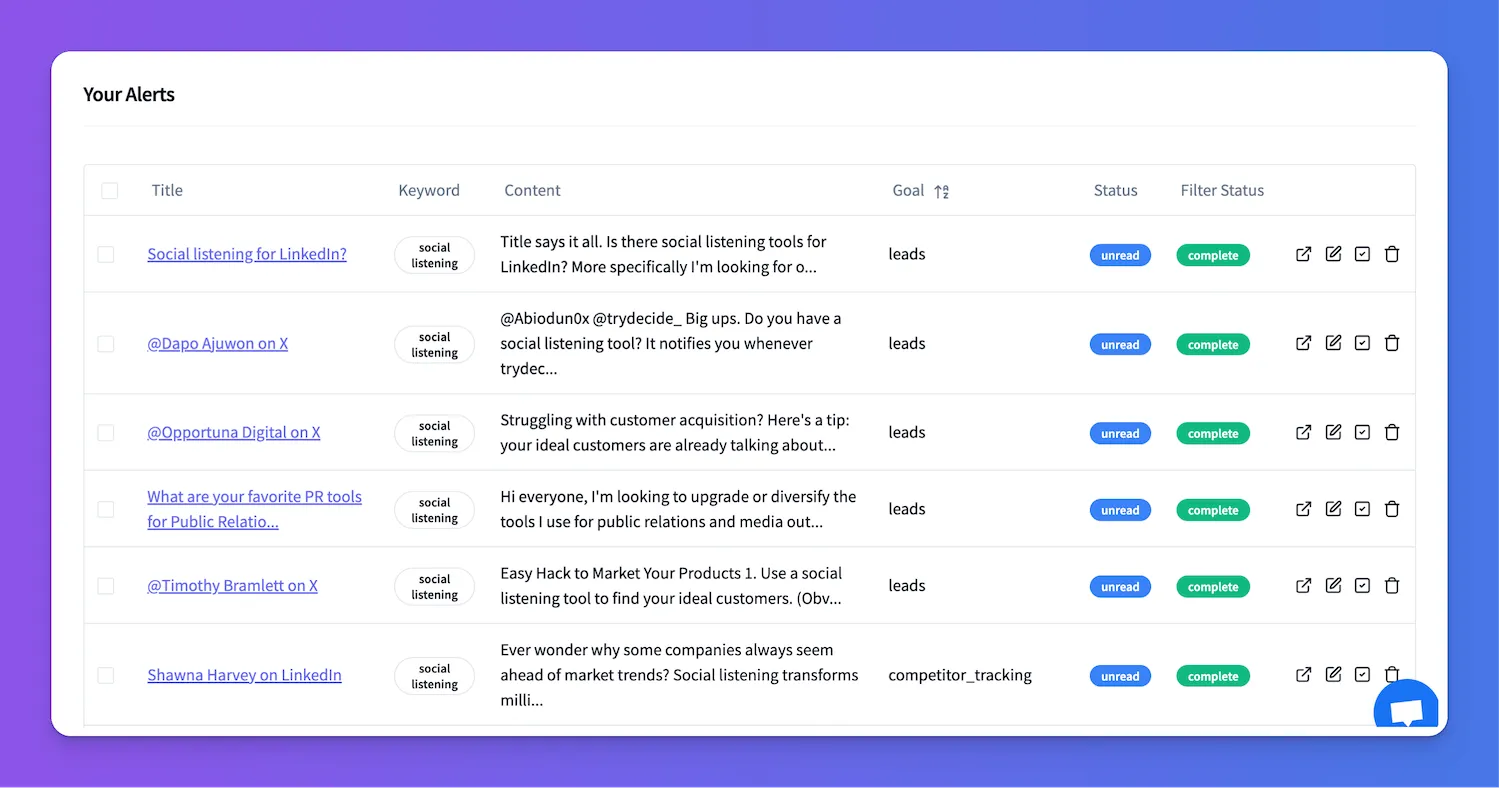
6. Step 5 — Organizing & Acting on Leads
A system isn't just about capturing posts — it's about acting on them.
- 🔥 Reply now: Hot intent (recommendations, alternatives)
- 📌 Save for later: Research or relationship-building posts
- 🚫 Ignore: Spam or low-intent noise
7. Step 6 — Review & Adjust Monthly
Your system should evolve with trends and customer language.
🗑️ Drop keywords
Drop keywords bringing too much noise.
➕ Add new ones
Add new ones from trends or competitor mentions.
📊 Review
Review which keywords actually led to leads.
8. Quick-Start Checklist
- Pick 5–10 high-intent keywords
- Choose 2–3 platforms to monitor
- Add filters to cut noise
- Set up monitoring (manual or Alertly)
- Check daily & engage with 2–3 posts
Don't build a system from scratch
With Alertly, you can start listening in minutes. Just enter your search keywords and get leads delivered straight to your inbox.